
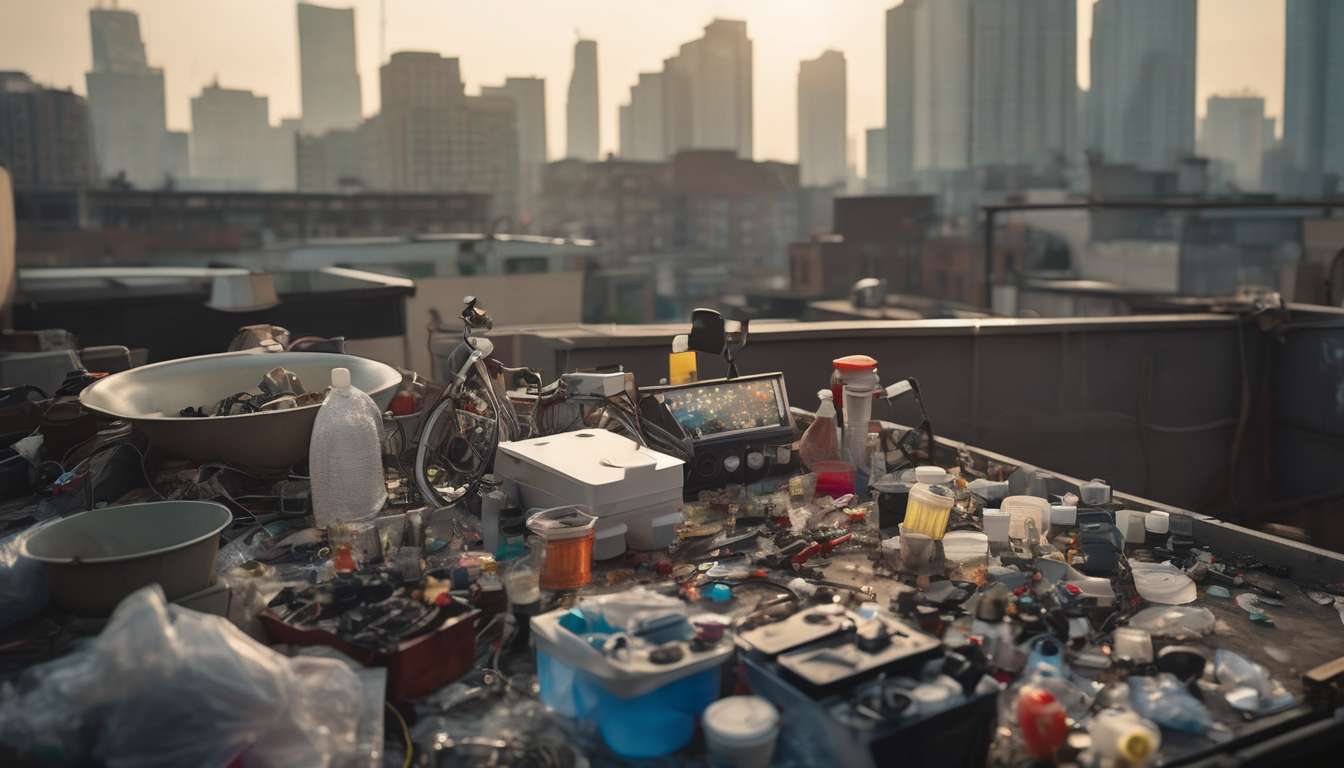
The smells of studio lights and the hum of servers may not seem related, yet we find their connection at the heart of our investigation into the environmental impacts of hosting adult photography services.
We trace how lighting rigs, climate-controlled sets, and frequent travel intersect with data centers streaming content, creating a layered carbon footprint that is rarely acknowledged.
Together we examine supply chains for props and costumes, the waste generated by single-use backdrops and makeup, and the energy demands of high-resolution video production and distribution.
We explore how regulatory grey areas and decentralized platforms complicate accountability, and how performers, producers, and hosting companies share responsibility yet experience different burdens.
Our goal is to map these often-overlooked environmental costs, identify practical reductions, and propose industry-sensitive strategies that respect privacy and consent while advancing sustainability.
By connecting physical production practices with digital infrastructure, we aim to prompt informed choices across the ecosystem.
Studio Energy Use
We should examine how lighting, HVAC, and equipment choices and how they drive studios’ electricity consumption and peak demand.
We know studio energy decisions shape our collective footprint, and we want practical ways to reduce that impact without sacrificing creativity.
Audit actual usage patterns.
- Conduct metering of lighting, HVAC, and major equipment during representative shoots.
- Identify baseline consumption, peak-demand events, and simultaneous-load contributors.
Swap inefficient gear for high-efficiency alternatives.
- Replace incandescent/tungsten lights with LED fixtures and efficient cameras and monitors.
- Upgrade appliances and power supplies to energy-efficient models and use smart power management.
Schedule shoots to minimize simultaneous loads that spike demand.
- Stagger equipment-heavy activities (lighting, craft services, HVAC-intensive setups).
- Use load-shedding or soft-start strategies for large equipment.
Pair targeted HVAC setbacks with ventilation best practices so comfort and air quality stay intact while cutting consumption.
- Apply setback schedules when spaces are unoccupied.
- Use demand-controlled ventilation, zoning, and efficient air handling.
- Prioritize filtration and localized ventilation during shoots to avoid over-conditioning entire spaces.
Factor travel emissions when planning location vs. in-studio shoots.
- Compare combined transport and studio energy costs; prioritize options that lower total emissions.
- Consolidate cast/crew travel and equipment transport to reduce trips.
Share resources to make sustainable production accessible and affordable.
- Create power-efficient gear libraries and shared inventories.
- Implement consolidated booking windows to maximize utilization and minimize redundant setup.
- Publish community guidelines and best practices for low-impact production.
These steps foster belonging, reduce costs, and shrink environmental impact.
- Thoughtful operational choices produce measurable reductions in energy use and peak demand across our network of studios.
- Shared practices spread benefits—lower expenses, greater access, and demonstrable sustainability outcomes.
Lighting and Heat
Lighting choices and heat output are tightly linked.
When we switch to efficient fixtures and control warmth from lamps we cut electricity use and cooling loads simultaneously.
Choose fixtures that reduce heat and power without sacrificing look.
- LED panels
- Low-heat Fresnels
- Adjustable lighting arrays
Design setups to use fewer fixtures while preserving aesthetics.
- Use diffusion, reflectors, and smart placement to maintain look without excess wattage.
- Plan scenes so lighting achieves the desired result with minimal units.
Use controls to match lighting to needs and avoid wasted heat.
- Install dimming controls and timers.
- Match lighting intensity to each scene.
- Avoid leaving fixtures hotter than necessary between sessions.
This keeps air-conditioning runs lower and more predictable.
Track progress and keep the team engaged.
- Document energy use per shoot so the team sees improvements.
- Share results to build ownership of sustainable choices.
Avoid shifting environmental impacts elsewhere.
- Don’t compensate lighting-efficiency gains by increasing travel or extra locations.
- Align creative standards with efficient gear to reduce overall footprint.
Benefits:
- Strengthens community and creative ownership.
- Lowers operating costs.
- Makes each shoot a tangible step toward greener operations.
Travel Emissions
Many shoots require travel; we should track and reduce the greenhouse gases from transporting cast, crew, and gear.
Start by mapping routes and choosing lower‑emission options.
- Map typical routes and travel patterns to identify high-impact trips.
- Pool car trips and coordinate schedules so fewer vehicles are used.
- Choose fuel‑efficient or electric vehicles when possible.
Prioritize lower‑carbon transit for unavoidable crew travel.
- Book direct transit to avoid extra legs and emissions.
- Prioritize rail over short‑haul flights to cut travel emissions significantly.
- Share ride details in advance to build trust and belonging across teams.
Include travel in budgeting and impact comparisons.
- Factor travel emissions into budgets alongside studio energy use.
- Recognize that a small transport change can match big lighting improvements.
Use local resources and remote tools when they meet creative needs.
- Evaluate local hires for remote shoots to reduce long‑distance travel.
- Use virtual collaboration tools where they don’t compromise quality.
Measure, set targets, and report progress.
- Track miles, fuel type, and travel modes.
- Set measurable targets and report progress as part of sustainable production commitments.
Together, make travel choices that respect people, reduce carbon, and keep work ethically and environmentally aligned.
Set Materials Waste
We’ll minimize set materials waste by planning, reusing, and diverting materials from landfill at every stage of production.
We audit upcoming builds, sharing responsibility so everyone feels included in decisions about materials, storage, and disposal.
We prioritize salvaging backdrops, rigs, and props, repairing rather than replacing, and we create a catalog so items circulate within our community rather than being discarded.
By coordinating schedules we cut redundant purchases that add to studio energy burdens and indirectly increase travel emissions through extra pickup trips.
We source modular, recyclable set elements and label bins for compost, recycling, and donation to keep waste streams clear.
We track metrics—materials purchased, reused, diverted—to celebrate progress together and refine practices.
Engaging crew and performers in post-shoot teardown fosters shared ownership of sustainable production goals.
When we need single-use items, we opt for certified compostables and arrange local processing; when giveaways are unavoidable we prioritize charitable redistribution.
This collective approach keeps waste down, costs lower, and relationships stronger.
Costume and Makeup Impact
We’ll reduce the environmental footprint of costumes and makeup by prioritizing durable garments, low-toxicity cosmetics, and laundering or recycling practices that extend product life.
We’ll choose pieces made through sustainable production methods, favoring local makers to cut travel emissions tied to shipping.
We’ll build a shared costume inventory, rotate items, repair rather than discard, and track usage so garments reach their full lifecycle.
We’ll select makeup with clear ingredient lists, minimal packaging, and refill options.
We’ll provide reusable applicators cleaned efficiently to limit water and energy use.
On-set routines will coordinate dressing and touch-ups to minimize repeated trips that increase studio energy and travel emissions.
We’ll train teams to launder costumes in bulk at lower temperatures and air-dry when possible, reducing energy intensity.
By making these choices together, we create a welcoming, responsible community that values longevity, transparency, and measurable reductions in the environmental impacts of our craft.
Data Center Footprint
Goal: Assess and reduce the data center footprint of our digital operations (storage, streaming, editing) to cut energy use and emissions from servers and networks.
Priority actions:
- Prioritize efficient encoding — use codecs, bitrates, and container formats that deliver required quality at the lowest bitrate.
- Remove redundant files — deduplicate assets and eliminate obsolete versions to shrink storage and retrieval loads.
- Choose hosts that publish renewable energy use — prefer cloud or colocation providers with transparent RE usage, renewable energy certificates, or direct clean-energy procurement.
Operational optimizations:
- Optimize file sizes and batch uploads to reduce transfer overhead and avoid repeated processing.
- Enable auto-scaling and avoid idle resources so compute and delivery scale to demand rather than remaining provisioned.
- Pick regions with cleaner grids to lower carbon intensity of compute and storage.
- Use lifecycle-aware retention policies (archive cold assets, delete per policy) to minimize long-term active storage.
People and process:
- Share contributor and crew guidelines on minimizing duplication, naming/versioning best practices, and when to re-encode versus re-use.
- Encourage low-power devices during editing and provide recommended settings and toolchains that are both efficient and production-ready.
- Communicate trade-offs so teams understand quality, cost, and emissions implications of choices.
Scope note:
- Focus on cloud and colocation footprints (servers, networks). Travel and on-site practices are important but outside this specific scope.
Outcome:
- These steps align with sustainable production values and help collectively shrink the digital carbon tied to our creative work.
Platform Accountability
We’ll hold platforms accountable by requiring transparent reporting on content delivery energy use, moderation-related compute, and third-party CDN emissions.
We’ll insist platforms publish standardized metrics so our community can assess environmental impacts linked to hosting adult photography services.
We recognize that studio energy and travel emissions are part of a broader system, and platforms should connect their infrastructure data to creator-side activities without policing content.
We’ll ask for dashboards that break down energy by region, peaks driven by viral content, and outsourced storage footprints so all stakeholders—creators, workers, and audiences—feel included in decision-making.
We’ll push for clear procurement policies favoring renewable-powered data centers and eco-conscious CDNs, while requiring verification of claims.
We’ll encourage platforms to support creators with tools to estimate the footprint of shoots and distribution, and to offer incentives for practices that reduce studio energy and travel emissions.
By demanding accountability, we’ll build a safer, more equitable ecosystem that aligns hosting with sustainable production goals.
Sustainable Production Practices
We’ll adopt practical on-set practices and planning measures that cut energy use, minimize waste, and lower travel needs without compromising creative quality.
We prioritize studio energy efficiency.
- Use LED lighting.
- Use smart power strips.
- Schedule shoots to maximize natural light.
- Benefit: Keeps costs down and builds a shared sense of stewardship.
We reduce travel emissions.
- Consolidate crew and equipment.
- Encourage local talent.
- Use remote collaboration tools when possible.
- Benefit: Lowers travel needs and helps everyone feel included in greener workflows.
We design sustainable production practices.
- Create clear checklists for reusable set pieces, rental gear, and digital backdrops.
- Avoid single-use props and disposable catering.
- Benefit: Minimizes waste while maintaining production value.
We measure and track progress.
- Track baseline energy and transport metrics together.
- Monitor improvements and celebrate wins as a team.
- Benefit: Provides data-driven validation of sustainability efforts.
We train crew and performers on low-impact practices.
- Teach waste sorting and other on-set sustainability behaviors.
- Reinforce that sustainability is part of our creative identity.
- Benefit: Embeds lasting cultural change.
By embedding these actions into process and culture, we lower environmental impact while keeping quality, collaboration, and belonging at the heart of every shoot.
What local regulations or zoning laws typically affect the operation of adult photography studios and their environmental compliance?
Which local rules typically shape where and how studios operate, and how they comply with environmental requirements
Zoning and location rules
- Zoning districts determine whether a studio can operate in a given area (commercial, industrial, mixed-use, etc.).
- Adult-use overlays or specific district overlays may further restrict or permit certain activities.
- Distance buffers from sensitive uses — such as schools, parks, playgrounds, or residences — are commonly applied and can limit siting options.
Permits and special authorizations
- Conditional-use permits (CUPs) or similar discretionary approvals often are required when a studio’s activities are allowed only with conditions.
- Special licensing (for example, businesses with controlled substances, certain cosmetic or medical treatments, or hazardous materials) may be required at the local or state level.
Building, safety, and operations codes
- Building codes (structural, fire safety, egress) prescribe how spaces must be constructed or modified.
- Ventilation and HVAC codes ensure adequate airflow, filtration, and temperature control for occupant health and process needs.
- Noise ordinances limit allowable operational noise levels and hours of operation.
Environmental and hazardous-materials requirements
- Hazardous-materials handling and storage rules cover classification, containment, labeling, and emergency response for any chemicals used.
- Waste management regulations dictate segregation, storage, disposal, and sometimes on-site treatment of solid and liquid wastes.
- Wastewater rules (including pretreatment or discharge limits) may apply if processes generate effluent that goes to sewer or storm drains.
Coordination and compliance
- Planning departments oversee zoning, CUPs, and land-use approvals.
- Health departments review sanitation, ventilation, chemical exposures, and sometimes licensing.
- Environmental and fire agencies handle hazardous materials, waste, wastewater, and fire-safety compliance.
- Ongoing compliance typically includes inspections, records and manifests, training, and community notification when required.
Key takeaway
- Studios must navigate zoning and proximity restrictions, obtain conditional permits and special licenses when required, follow building, ventilation, noise, hazardous‑materials, waste, and wastewater codes, and actively coordinate with planning, health, and environmental agencies to remain compliant and maintain community trust.
How do water usage and wastewater disposal from studio facilities (e.g., showers, laundering, on-set cleaning) contribute to the environmental footprint, and what mitigation options exist?
Studio water use and wastewater disposal increase environmental footprint through three main pathways: high water consumption, detergent and chemical loads, and energy used for heating.
Reduce consumption by installing efficient fixtures and equipment:
- Install low-flow faucets, aerators, and showerheads.
- Use water-efficient washers and dishwashers.
- Adopt work practices that minimize water use (e.g., reuse rinse water where safe).
Lower chemical and pollutant loads by choosing safer products and treatment options:
- Choose biodegradable, low-phosphate, and low-toxicity cleaners and solvents.
- Implement segregation of hazardous wastes from greywater.
- Where permitted, treat and reuse greywater for nonpotable purposes (e.g., irrigation, toilet flushing).
Maintain systems and monitor discharges to prevent contamination and energy waste:
- Perform regular maintenance to detect and repair leaks.
- Monitor wastewater discharge for contaminants and compliance with local limits.
- Pursue on-site treatment (e.g., filtration, biological systems) or connection to compliant municipal treatment systems to reduce environmental harm.
Are there specific environmental health risks to performers and staff from chemicals used in photography equipment, prop treatments, or special effects, and how can those be minimized?
We’re asking whether chemicals from equipment, prop treatments, or special effects pose health risks to performers and staff.
Known hazards include:
- Irritants that can affect eyes, skin, and airways.
- Solvents which can cause dizziness, headaches, and organ damage with repeated exposure.
- Isocyanates that can provoke asthma and sensitization.
- Aerosolized particulates that can be inhaled and cause respiratory problems and systemic effects.
We’ll minimize harm by implementing multiple controls:
- Choosing low‑toxicity materials and substituting safer alternatives whenever possible.
- Using proper ventilation (local exhaust, general dilution) to reduce airborne contaminants.
- Enforcing PPE (respirators, gloves, eye protection) appropriate to the hazard.
- Storing chemicals safely with proper labeling, segregation, and spill containment.
- Training crews on hazards, safe handling, emergency procedures, and PPE use.
- Following Safety Data Sheets (SDSs) for handling, storage, and first aid guidance.
- Monitoring air quality to detect exposures and verify controls are effective.
Together, these steps reduce acute and long‑term risks to performers and staff.
Conclusion
You can reduce the environmental impact of adult photography by making conscious choices at every step.
Prioritize energy-efficient lighting and temperature control.
- Use LED or other low-energy lighting.
- Implement smart thermostats and schedule HVAC only when necessary.
Cut travel by shooting locally or using remote shoots.
- Hire local talent and crew.
- Use high-quality remote shoot workflows when appropriate to avoid unnecessary travel.
Choose reusable, low-impact sets, costumes, and makeup.
- Reuse and repair set pieces and props.
- Select sustainable fabrics and refillable or eco-certified makeup.
Work with platforms that disclose data-center practices and minimize storage.
- Prefer platforms that publish energy and carbon metrics.
- Reduce stored content to essentials and use efficient file formats and compression.
Hold crews accountable for waste management and adopt sustainable production policies.
- Create and enforce on-set recycling and composting procedures.
- Provide training and clear responsibilities for waste reduction.
- Document policies so they can be repeated across productions.
Small changes add up, letting you produce responsibly while maintaining creative standards.