
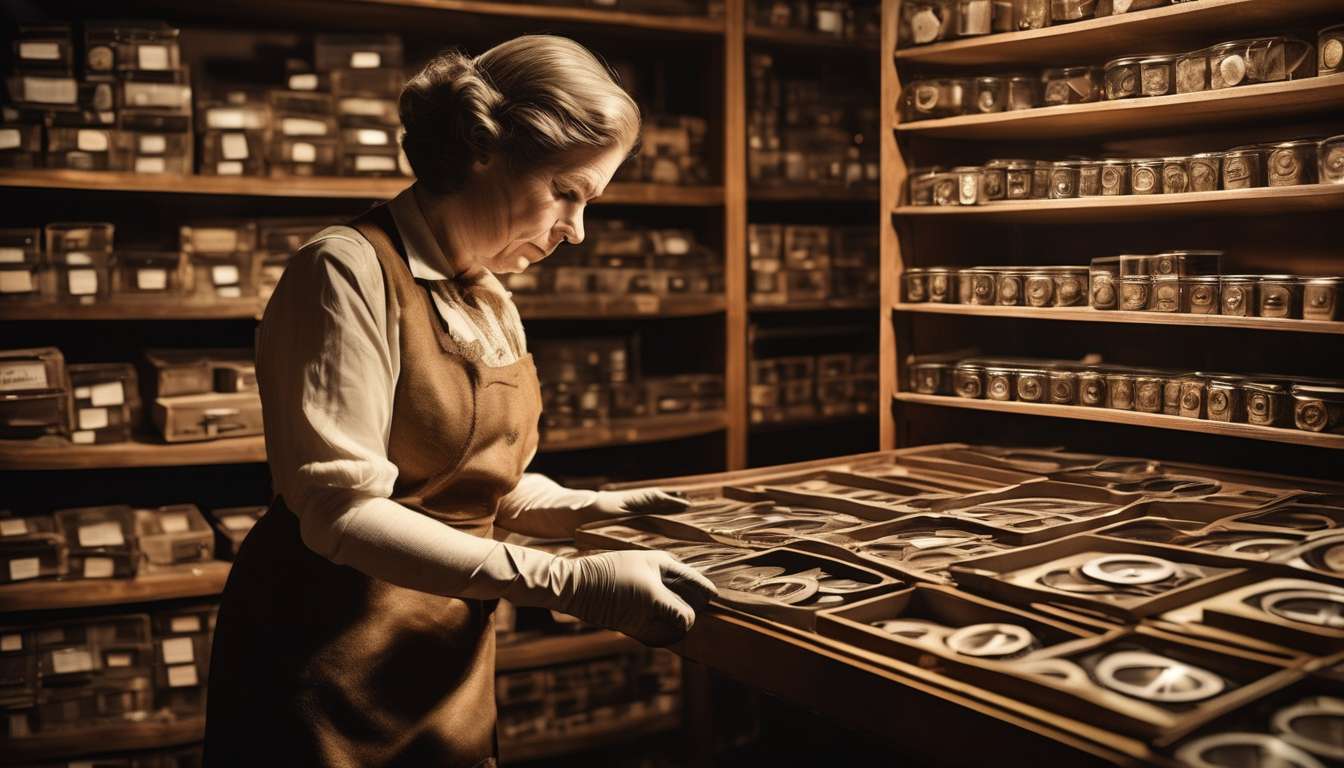
Everyone assumes adult photography has no place in cultural heritage, dismissed as ephemeral or exploitative rather than archival.
We challenge that misconception by showing how these images document social norms, technological shifts, and aesthetic developments across decades.
As curators, researchers, and community members, we trace the lives of photographs that survived obscurity to reveal changing attitudes toward sexuality, censorship, and representation.
We examine preservation choices—what gets saved, what is erased—and the ethical frameworks that guide access and interpretation.
By situating adult photography alongside mainstream media, legal records, and personal collections, we argue that these materials are indispensable for a full account of visual culture.
Our work highlights collaborative strategies for responsible stewardship:
- Consent-aware cataloging.
- Secure storage.
- Contextualized exhibitions.
- Inclusive narratives that respect subjects and audiences.
In reclaiming adult photography as a legitimate archival domain, we expand the stories archives can tell about intimacy, power, and the public sphere.
Historical Significance
We recognize that preserving adult photography collections documents cultural shifts in sexuality, technology, and censorship across decades.
We see adult archives as communal memory, where photographers, subjects, and audiences converge to tell who we were and how our norms changed.
We acknowledge that these materials reveal evolving aesthetics, distribution methods, and legal battles that shaped public taste and access.
We want contributors and researchers to feel included, knowing these collections reflect diverse experiences rather than a single narrative.
We insist that care for these holdings attends to consent and privacy, so people represented aren’t reduced to artifacts without regard for their autonomy.
By situating images within contextual records—dates, publication histories, personal accounts—we help communities understand continuity and rupture in sexual representation.
We’re strengthening connections between scholars, archivists, and lived communities, so the archive becomes a place where memory, research, and respect build shared understanding of a complicated cultural history.
Ethical Stewardship
We commit to stewarding these collections with transparency, prioritizing consent, privacy, and the dignity of everyone depicted.
We recognize that adult archives hold intimate records tied to real people, and we insist on ethical stewardship that centers respect and accountability.
We consult community stakeholders, advocates, and contributors to ensure handling reflects lived experiences and collective standards.
We implement clear policies about consent and privacy, honoring withdrawal requests and contextualizing materials so they’re never exploited.
We balance access with protection, using informed protocols that prevent harm while allowing responsible research and cultural understanding.
We provide education and guidance to staff and users so decisions are consistent, humane, and legally sound.
We welcome dialogue, critique, and shared governance to build trust and belonging across communities represented in these holdings.
By keeping dignity at the core, we preserve not only historical artifacts but also relationships and rights, reinforcing that ethical stewardship is essential to the long-term value and integrity of adult archives.
Archival Methods
We document, preserve, and provide access using standardized, evidence-based methods that keep materials secure, searchable, and contextually rich.
We organize collections with clear metadata schemas, consistent controlled vocabularies, and provenance records so adult archives are discoverable and trustworthy for researchers and community members alike.
We adopt preservation workflows to extend item lifespan, including:
- Digitization standards.
- Format migration plans.
- Environmental controls for physical holdings.
We implement respectful cataloging and strong disaster preparedness by maintaining cataloging practices that honor creators and subjects, and robust backup and disaster-recovery protocols.
We prioritize training and collaborative governance, inviting community stakeholders to participate in appraisal and description so our work reflects shared values.
We balance open access with protections for sensitive materials, integrating consent and privacy considerations into access controls and use agreements.
We regularly evaluate and update our practices by assessing them against ethical stewardship principles, auditing systems, and revising procedures to remain responsive to technological change and community needs.
By doing this, we create a welcoming archive that preserves history responsibly and inclusively.
Consent and Privacy
We prioritize obtaining clear, documented permissions and protecting personal data so people depicted or involved can control how images and records are used.
Consent and privacy are nonnegotiable foundations in our adult archives work; we ensure contributors, performers, and staff feel respected and included.
We gather provenance, release forms, and context notes, and we store them with access controls that limit who can see sensitive files.
We create anonymization options and embargo periods when people ask for distance from exposure.
That approach builds trust and signals that ethical stewardship guides every decision — from intake to preservation.
We review requests for research access through a community-informed rubric, balancing scholarly value with risk to individuals.
When harms are identified, we act promptly to remove or restrict material, and we document those choices transparently so the community understands why.
By centering consent and privacy, we strengthen relationships and ensure our archives serve people, not exploit them.
Exhibition Practices
We prioritize thoughtful, contextualized displays that respect performers’ wishes, protect privacy, and accurately convey historical and cultural meanings.
We center community in exhibition practices, ensuring adult archives are presented with dignity and transparency.
- We curate selections that illuminate industry practices, aesthetics, and social context.
- We avoid sensationalism.
We consult with contributors and rights-holders, documenting consent and privacy decisions and honoring restrictions.
- We record restrictions in labels, access levels, and online reproductions.
- We provide clear consent documentation.
We design viewing environments that communicate content and protect visitors’ well‑being.
- We signal content and provide trigger warnings.
- We create private spaces for study when appropriate.
We staff teams with archivists, community advisors, and subject‑matter experts so interpretation is collaborative and accountable.
We commit to ethical stewardship through secure, documented care of materials.
- We maintain provenance records.
- We provide secure storage and controlled digital access.
- We review displays regularly as norms evolve.
We welcome feedback and invite community voices into programming.
- We provide clear pathways for requests or corrections.
- We use community input to guide future exhibitions.
Together, we build exhibitions that educate, respect, and belong to the communities they represent.
Legal Contexts
We’ll navigate the legal frameworks that govern collecting, exhibiting, and providing access to adult photography, clarifying rights, restrictions, and institutional responsibilities.
We recognize that adult archives carry unique obligations:
- Copyright
- Age verification laws
- Obscenity standards
- Donor agreements
These obligations all shape what we can preserve and show.
We’ll insist on clear policies that protect creators and subjects while enabling research and cultural memory.
We center consent and privacy in decision-making.
- Ask whether release forms exist.
- Determine how sensitive identifiers are handled.
- Decide when access should be restricted to trusted users.
We commit to ethical stewardship by documenting provenance, maintaining secure storage, and applying takedown or redaction procedures when legal or moral concerns arise.
We’ll coordinate with legal counsel and peer institutions to interpret statutes and case law—never isolating our practice.
By doing this, we create a welcoming, accountable space where community members feel included and confident that adult photography is preserved responsibly and lawfully.
Community Collaboration
We’ll co-develop collecting priorities, access policies, and programming with creators, communities, and advocacy groups to ensure they reflect lived needs and histories.
We’ll build adult archives that center lived experience, ensuring contributors feel seen, heard, and safe.
We invite community members to set boundaries around materials, helping us respect consent and privacy while preserving context.
We’ll hold regular participatory meetings and advisory panels so decisions aren’t top-down, keeping governance transparent and accountable.
We’ll train staff in trauma-informed practices and create clear consent protocols before acquisition or digitization.
We’ll offer community-controlled access tiers, balancing scholarly use with individual dignity.
We’ll document provenance collaboratively and commit to ethical stewardship that safeguards both the material and the people behind it.
By sharing power, we strengthen trust, broaden representation, and create archives that belong to everyone involved. Our goal is a responsive, community-rooted archive that honors history without compromising safety or autonomy.
Future Directions
Moving forward, we’ll prioritize scalable, community-driven strategies that expand access, preserve diverse media formats, and adapt to legal and technological changes.
We’ll build adult archives that feel welcoming and accountable, inviting contributors, researchers, and communities to co-create collections.
We’ll center consent and privacy.
- Implement granular permissions.
- Use robust anonymization where needed.
- Maintain clear provenance records so contributors see how materials are used.
We’ll commit to ethical stewardship through transparent governance, regular audits, and training for staff and volunteers on bias, context, and harm reduction.
We’ll adopt interoperable standards and distributed storage to protect formats and guard against loss while ensuring discoverability for scholars and community members.
We’ll pursue policy engagement and community-led licensing that balance access with individual rights.
We’ll foster partnerships with libraries, museums, and tech teams to pilot tools that respect dignity.
By aligning practice with shared values, we’ll make adult photography history accessible, safe, and rooted in mutual care.
How do cultural archives decide whether to digitize or keep original physical materials when both are available?
When deciding whether to digitize or keep originals, we weigh three primary goals: access, preservation, and meaning.
We’ll digitize to:
- broaden reach,
- enable research, and
- reduce handling risks.
We’ll keep originals when:
- materiality matters (e.g., texture, construction),
- rarity or uniqueness is a factor, or
- authenticity must be preserved.
We factor in:
- conservation needs,
- legal and ethical constraints,
- community preferences, and
- resource limits.
We’ll document choices transparently and collaborate with stakeholders so collections remain safe, meaningful, and accessible for everyone.
Are there special preservation techniques for materials that include non-photographic erotica, such as magazines with mixed media (e.g., inserts, scents, or tactile elements)?
Question: Do special preservation techniques exist for mixed-media erotica (e.g., magazines with inserts, scents, or tactile elements)?
Short answer: Yes. Specialized strategies are used to preserve mixed-media erotica while balancing access, material integrity, and community values.
Key approaches:
-
Environmental and housing controls
- Maintain stable temperature and relative humidity to slow chemical breakdown.
- Use specialized enclosures (e.g., polyester sleeves for inserts, buffered boxes for acidic papers) to protect components from dust, light, and abrasion.
-
Material-specific conservation
- Buffered and archival-quality papers and interleaving are used to separate and support fragile pages.
- Conservation treatments (stabilization, surface cleaning, minimal repairs) performed by trained conservators for brittle or torn elements.
- Separation and individual treatment of components that react differently (e.g., metallic inks, adhesives, scented inserts).
-
Handling reactive components
- Document and analyze scents and adhesives to determine composition and deterioration risks.
- Use conservation-grade methods to stabilize or isolate problematic adhesives and scent carriers; when necessary, remove or encapsulate unstable parts to protect the rest of the object.
-
Digitization and surrogate creation
- Digitize fragile components (high-resolution imaging; capture texture/scents where feasible with descriptive metadata) to reduce handling.
- Keep originals when feasible, but create and provide surrogates for access to especially fragile or hazardous parts.
-
Documentation and stakeholder engagement
- Thoroughly document materials, treatments, and decisions (condition reports, treatment reports, storage history).
- Involve community stakeholders to ensure treatments respect both the cultural context and users’ sense of belonging; consider access needs, privacy, and ethical concerns.
Outcome: These combined strategies slow deterioration, reduce handling risks, preserve as much original material as possible, and ensure treatments align with ethical and community considerations.
How do archives handle materials produced by marginalized creators when provenance is unclear or missing?
We prioritize care and community when provenance is unclear or missing.
We document what we know, record gaps, and avoid assumptions that erase creators’ identities.
We consult local communities, scholars, and possible rights holders.
We create descriptive metadata that reflects uncertainty.
We establish access policies that balance preservation, privacy, and safety.
We welcome community input to:
- Correct records.
- Rightfully acknowledge creators.
- Build trust around stewardship and shared belonging.
Conclusion
You’ve seen how cultural archives safeguard adult photography’s history while balancing respect, legality, and community needs.
You’ll want ethical stewardship, clear consent and privacy practices, and thoughtful exhibition methods that honor subjects and audiences.
By using rigorous archival standards, collaborating with stakeholders, and staying alert to changing laws and tech, you’ll help ensure these materials are preserved responsibly and accessibly.
Moving forward, you’ll prioritize transparency, care, and inclusion in shaping their future.